
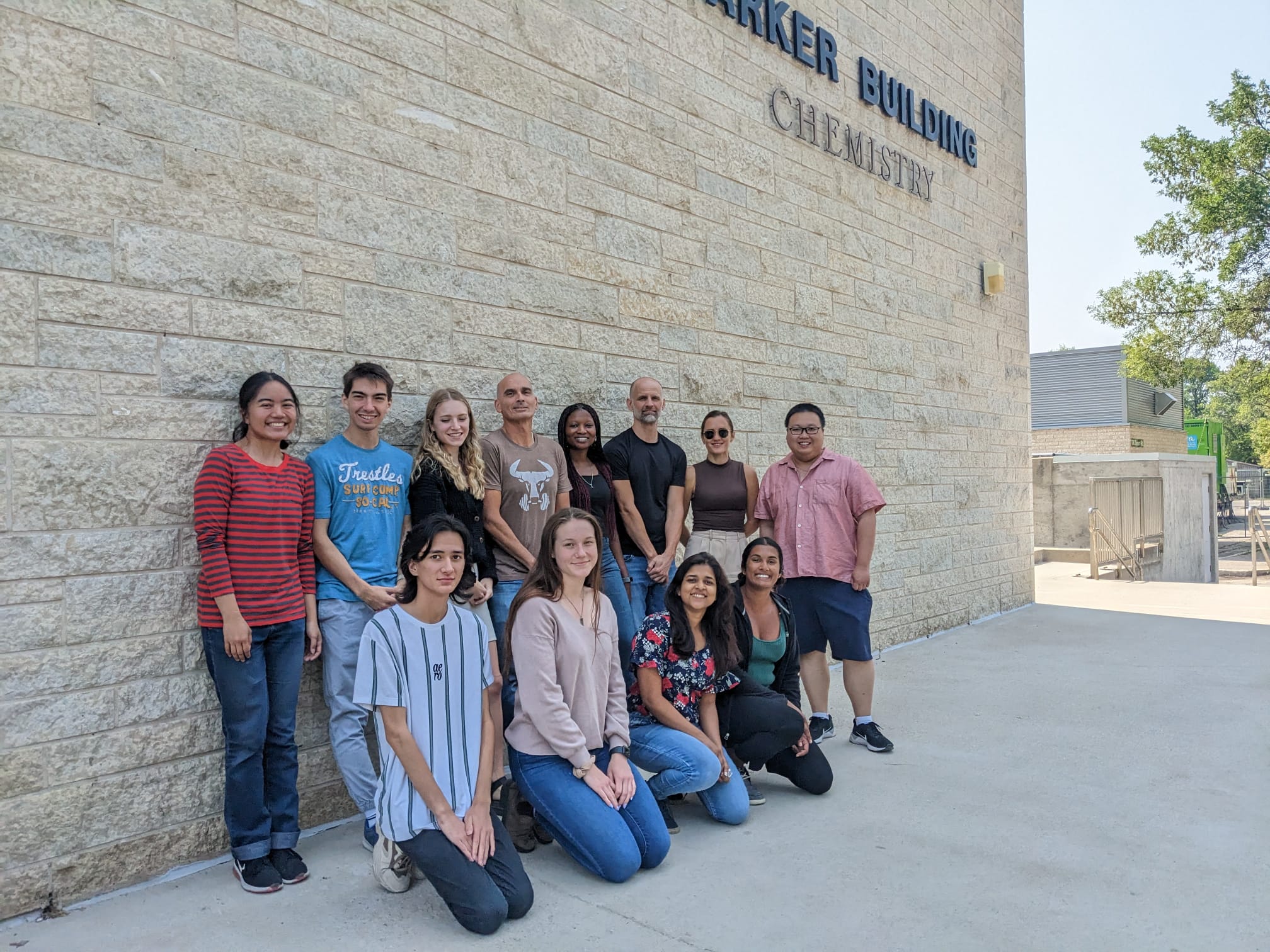
The COGRAD team, led by Dr. Gregg Tomy, comprises a dynamic group of researchers committed to advancing the understanding of collaborative research methodologies. Each member brings a unique set of skills and perspectives, fostering an environment of innovation and creativity. Together, the team engages in interdisciplinary projects, sharing insights and collaborating closely to tackle complex challenges in the field. With a shared passion for discovery, the COGRAD team is poised to make significant contributions to the research community.
COGRAD Staff

Dr. Gregg Tomy, PhD, Director
Gregg has over 20 years of experience analyzing complex contaminants in environmental matrices. He is a trained analytical environmental chemist and graduated with his PhD from the University of Manitoba in 1997. Gregg has received numerous national and international recognitions. In 2009, he was awarded the top young international environmental researcher by his peers at the Royal Society of Chemistry (UK) and the Society of Environmental Toxicology and Chemistry. His scientific expertise has been sought by members of the United Nations Stockholm Convention, the premier global treaty that regulates the production and use of anthropogenic compounds in the environment, as an international expert on analytical chemistry and ecotoxicology. As a former government of Canada scientist, Gregg received the Ministerial Award of Excellence (2011), one of the highest awards that can be given to a federal scientist, for his scientific work on behalf of Canada with the United Nations.
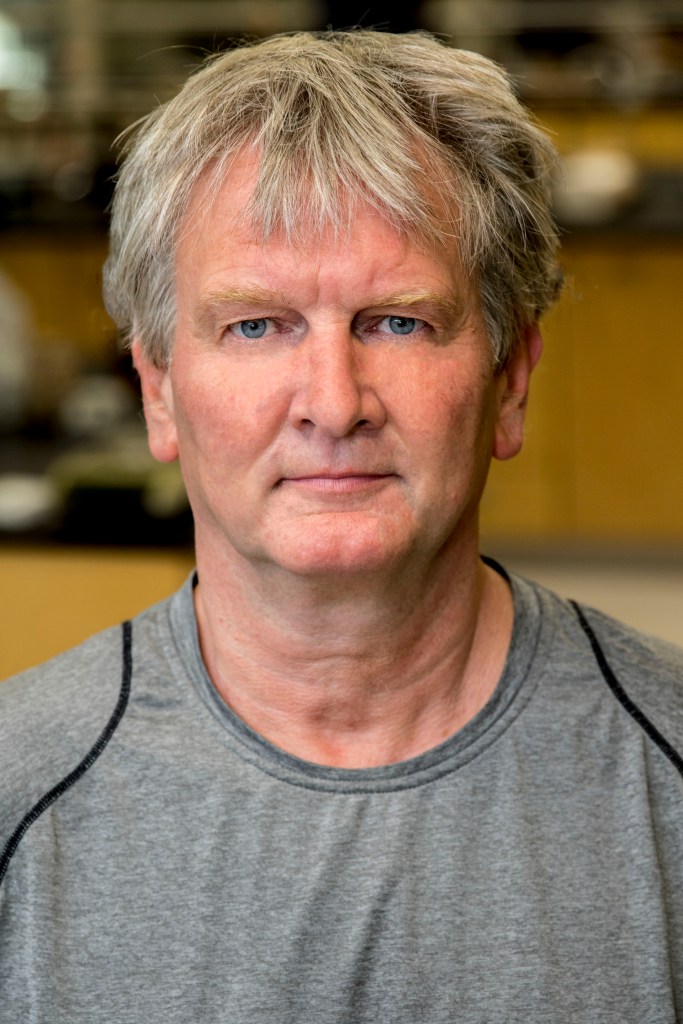
Dr. Jörg Stetefeld, PhD, Director
Dr. Stetefeld is a Canada Research Chair in Structural Biology and Professor of Biochemistry. He studied Biochemistry and Crystallography and received his PhD at the Max-Planck-Institute for Biochemistry under the supervision of Nobel laureate Robert Huber. Dr. Stetefeld worked in the pharmaceutical industry for several years and established his research group in Winnipeg in 2006. He performs an integrated approach combining several high-resolution structural biology techniques with in-depth biophysical and biochemical methods. His expertise lies in revealing structure-function relationships of target systems and the development of applications thereof. Dr. Stetefeld determined the first right-handed coiled coil structure of the archaea S. marinus. This unique nanotube shows four large cavities and lays the foundation for the development of passive sampler devices as a new generation of bioremediation tools.

Thor Halldorson
Thor Halldórson is the Lab Manager and Technician at COGRAD. He brings extensive experience in analytical chemistry and laboratory management, specializing in the operation, maintenance, and optimization of advanced chromatographic and mass spectrometric instrumentation used for trace-level analysis of organic contaminants.
In his role, Thor supports researchers by ensuring the smooth operation of laboratory workflows, maintaining high standards of data quality and safety, and providing technical expertise in method development and sample analysis. His strong analytical skills and dedication to precision play a key role in advancing COGRAD’s mission to develop innovative solutions for environmental monitoring and remediation.
COGRAD Graduate Students

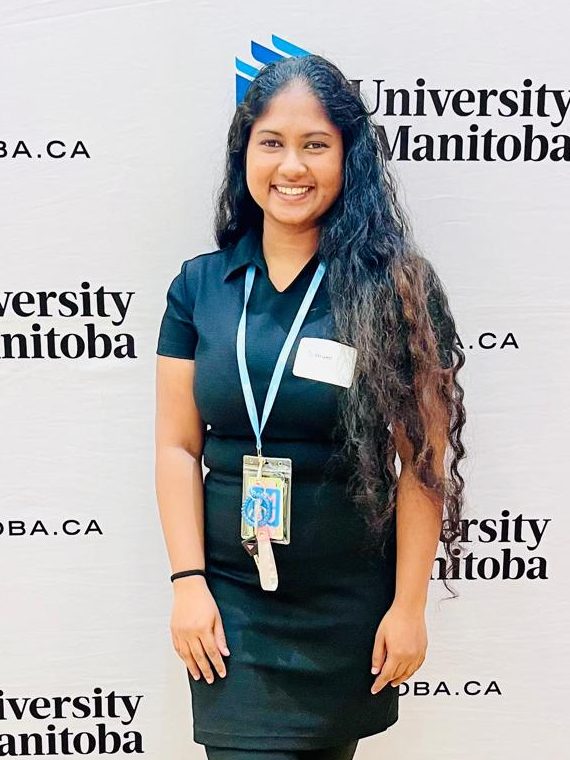


Jordan Wong
MSc Student
Former Members
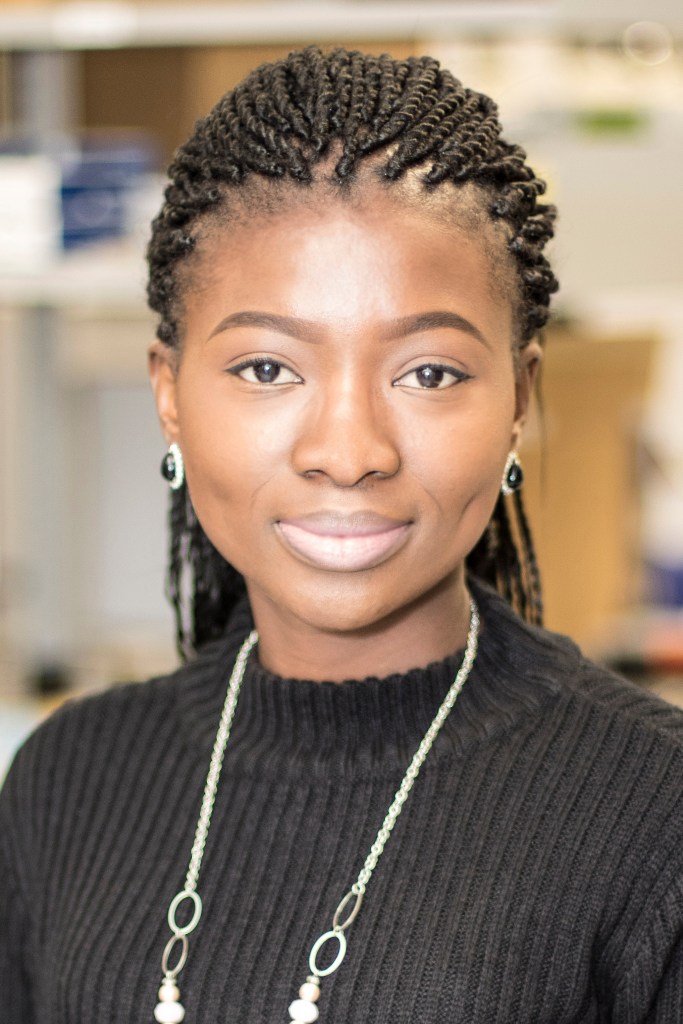
Dr. Grace Idowu
Dr. Ifeoluwa Grace Idowu is an environmental analytical chemist and a former PhD student and postdoctoral fellow of COGRAD. She specializes in the trace-level analysis of organic compounds using advanced chromatographic and mass spectrometric techniques.
Her doctoral research focused on the development, optimization, and validation of high-sensitivity analytical methods for detecting and quantifying polycyclic aromatic hydrocarbons (PAHs), alkylated polycyclic aromatic hydrocarbons (APAHs), and their derivatives in complex environmental matrices.

Dr. Zhe Xia
Dr. Zhe Xia is a former PhD student and Quality Assurance Manager and Postdoctoral Fellow at the COGRAD. In his role at COGRAD, Dr. Xia oversaw the implementation and maintenance of quality‑management systems, ensuring data integrity, method validation, and regulatory compliance across all analytical workflows. His doctoral research focused on the development and validation of analytical methods for halogenated polycyclic aromatic hydrocarbons (HPAHs), and during his postdoctoral research, he advanced methods for the simultaneous analysis of all polycyclic aromatic compound (PAC) subclasses.
Erin C. Liebzeit
MSc Student

 COGRAD